


Chart of the Week
NDR: Energy shock reignites global monetary tightening risks
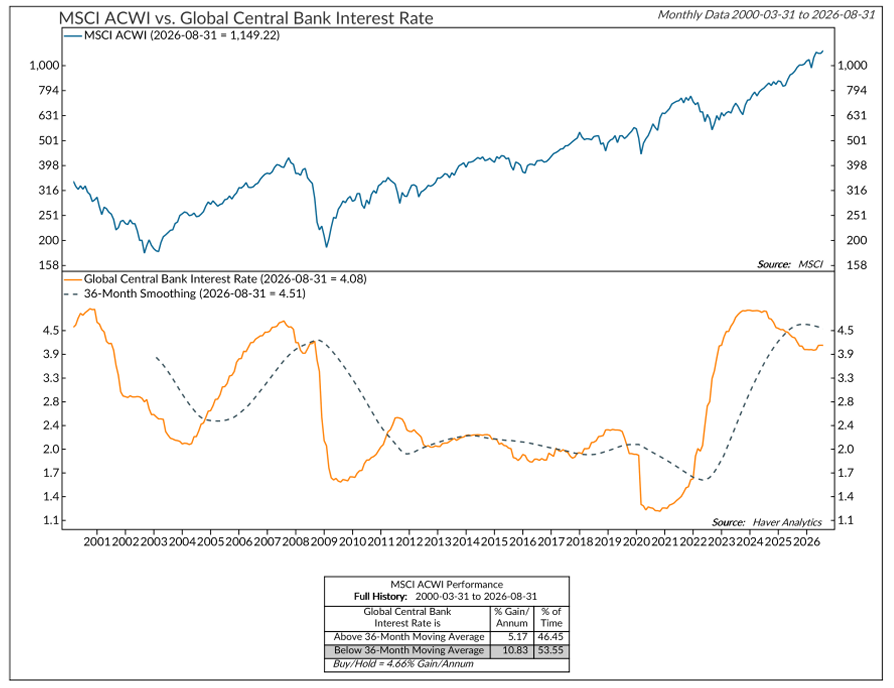
The outbreak of war in the Middle East and the resulting surge in energy prices have prompted a hawkish shift among many of the world's major central banks, increasing the risk of further policy tightening as policymakers seek to prevent energy-driven inflation from becoming embedded in wages and prices.
The Federal Reserve recently delivered its first rate hike in three years and could raise rates again before year-end, while the European Central Bank and Bank of Japan have each tightened policy for a second time this year, with further increases likely given resilient economic activity and persistent inflation pressures. Although the Bank of England held rates steady, its messaging remained notably hawkish.
As a result, the share of global central banks in easing cycles has declined sharply, particularly among developed markets. While historical experience suggests that gradual tightening typically poses limited risks to equities, a prolonged period of elevated energy prices could lead to a more restrictive global policy environment. For now, however, global central bank indicators remain broadly supportive of equity markets, with the GDP-weighted global policy rate still below its 36 month moving average despite moving higher this year (chart above). Download the full publication by completing the form to the right.
Delve deeper into the dynamics shaping the economic landscape and offer actionable strategies for investors. Let us help you, See the Signals.™ To subscribe to the NDR Blog, click here.
Ned Davis Research, Inc. (NDR), or any affiliates or employees, or any third-party data provider, shall not have any liability for any loss sustained by anyone who has relied on the information contained in any NDR publication. The data and analysis contained herein are provided “as is.” NDR disclaim any and all express or implied warranties, including, but not limited to, any warranties of merchantability, suitability or fitness for a particular purpose or use. Past recommendations and model results are not a guarantee of future results. Using any graph, chart, formula or other device to assist in deciding which securities to trade or when to trade them presents many difficulties and their effectiveness has significant limitations, including that prior patterns may not repeat themselves continuously or on any particular occasion. In addition, market participants using such devices can impact the market in a way that changes the effectiveness of such device. This communication reflects our analysts’ opinions as of the date of this communication and will not necessarily be updated as views or information change. All opinions expressed herein are subject to change without notice. NDR, or its affiliated companies, or their respective shareholders, directors, officers and/or employees, may have long or short positions in the securities discussed herein and may purchase or sell such securities without notice.